

Wildfire swept through ranch country in southwestern Idaho and eastern Oregon this summer, scorching rangeland and leaving ranchers with damaged fences, lost grazing ground and livestock that still needed to be fed.
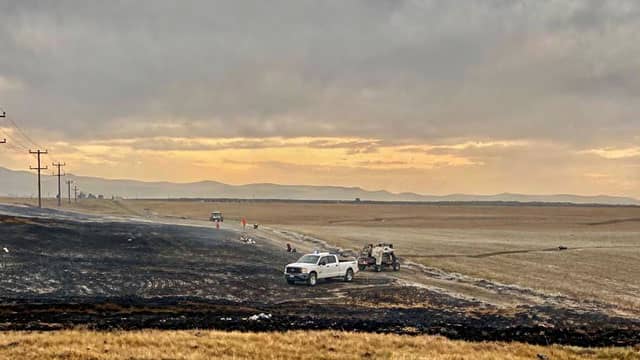
The Big Grass Fire was among the largest fires to hit the region, burning more than 570,000 acres across a large stretch of rangeland in Idaho and eastern Oregon. Farther north, the Tartar Fire burned nearly 160,000 acres near Weiser, Idaho.
The impact reached people and operations connected to Simplot’s Land and Livestock and Western Stockmen’s businesses. In the days that followed, Simplot employees found themselves responding in several ways, from helping protect cattle and property while the Big Grass Fire was active to getting feed to ranchers dealing with what it left behind.
Getting Feed to Ranchers
For cattle producers who lost access to grazing ground, one need didn’t wait for the smoke to clear: feed. Simplot Western Stockmen’s donated protein and mineral blocks and tubs for ranchers managing short-term livestock needs after the fires. Simplot also provided financial support for recovery efforts.
“So many of our customers are affected by these fires,” said Ben Gavica, director of sales and marketing. “We are glad to help out during this very challenging time.”
Other needs will remain long after the initial response.
Land and Livestock has an established relationship with the Owyhee Cattlemen’s Heritage Foundation, a nonprofit that supported ranchers affected by the Big Grass Fire. The foundation is helping cover recovery expenses such as fencing materials, hay and temporary grazing leases, as well as potential costs associated with transporting livestock. Simplot continues to support the organization as those recovery efforts move forward.
Working Near the Fire Line
While Simplot Western Stockmen’s was helping address feed needs, some Land and Livestock employees were working much closer to the fire itself. Several are members of a local Rangeland Fire Protection Association, or RFPA. The associations are largely made up of ranchers and local landowners who are trained and equipped to assist with wildfires in remote rangeland, where getting resources to a new fire can take time.
Land and Livestock employees have trained for and participated in wildfire response for 13 years. That experience became particularly relevant as the Big Grass Fire moved toward areas where Simplot cattle were grazing.
Simplot employees worked with RFPA members, neighboring ranchers and the incident management team to identify places where fire lines could be built. Under the coordination of the fire management team, bulldozers constructed lines on public land. The teams also used Simplot equipment to build additional lines on private property near areas where cattle had been gathered. At the same time, employees were keeping track of the cattle.
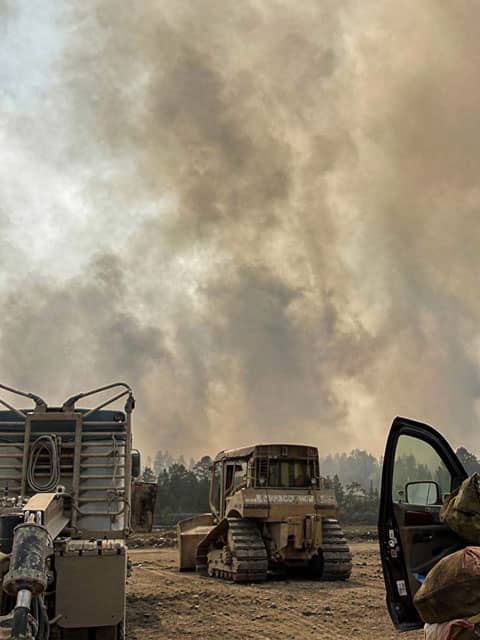
The volunteers gathered animals within roughly 20 miles of the affected area into designated locations while others monitored fire conditions and coordinated with fire officials. Simplot employees who are RFPA members also worked with the Bureau of Land Management on response efforts as new fires started in the area.
After the Flames
The fires themselves move fast. What they leave behind is a much longer problem for a working ranch. Burned grazing ground can take time to recover, while damaged fencing can affect where cattle can safely be kept. Animals may need to be moved to another pasture or fed until grazing becomes available again. Each of those decisions can bring another expense at a time when ranchers are already assessing what was lost.
This is the stage many impacted ranchers are currently in.
Across southwestern Idaho and eastern Oregon, Simplot employees continue to help with recovery efforts continue with help from ranchers, local organizations, fire crews and others who know these communities and the land they depend on.